
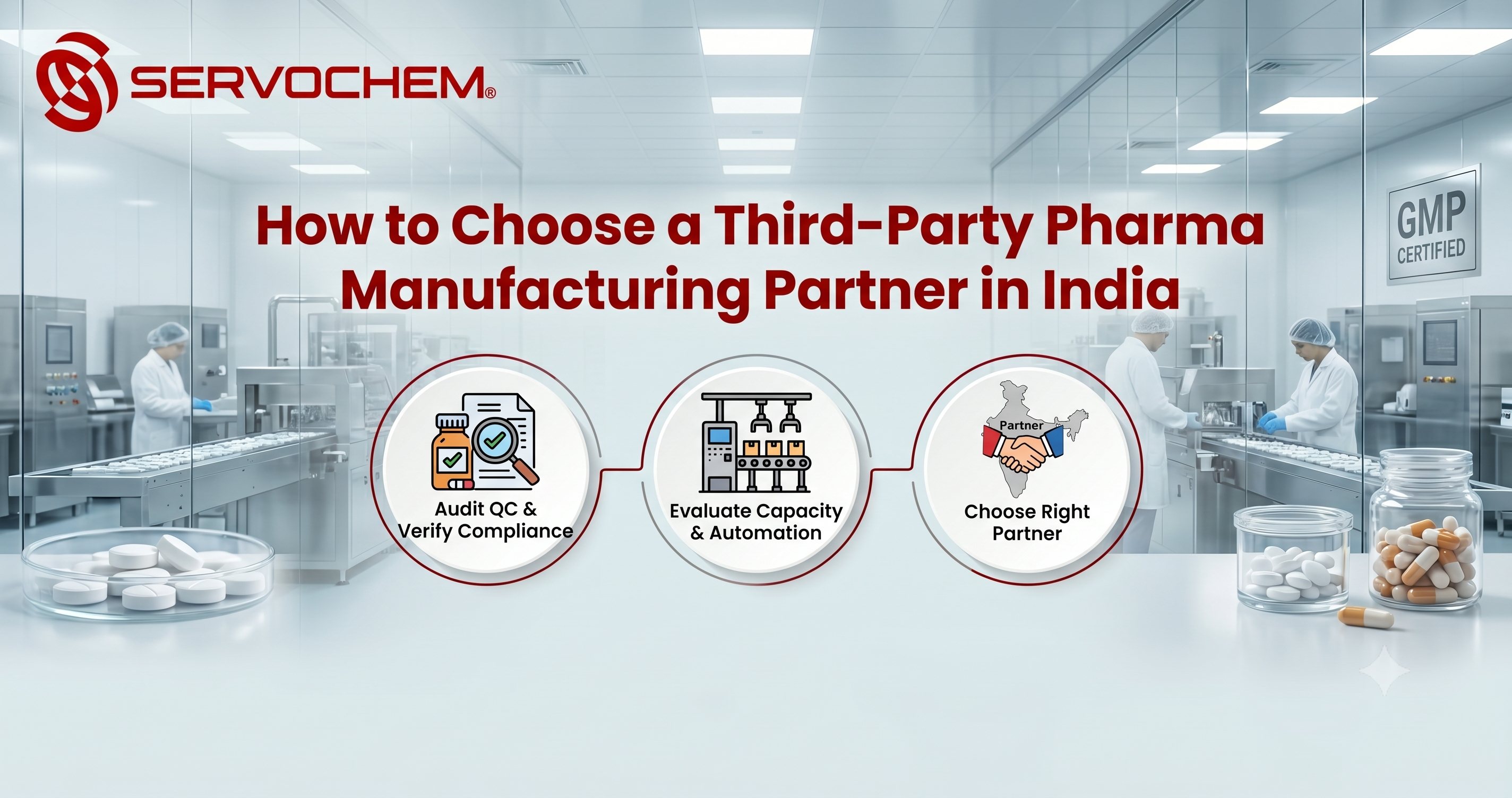
Outsourcing medicine production has become the standard operating model for pharma brands, marketers, and distributors across India. Setting up a dedicated manufacturing unit requires massive capital, complex regulatory approvals, and ongoing overheads. By shifting production to an external facility, brands can channel their energy entirely into marketing, sales, and expanding their distribution footprint.
However, the pharmaceutical market is highly fragmented. Selecting a manufacturing partner is not just a procurement decision; it directly impacts your brand's market reputation and regulatory standing. A poor selection can increase the risk of quality issues, supply delays, or compliance challenges.
To help you navigate this process, here is a practical roadmap based on commonly followed industry evaluation practices and manufacturing standards.
While every contract manufacturer in India will claim to have standard certifications, your assessment must look deeper into actual compliance tracking.
A foundational requirement is ensuring the facility operates within a verified GMP-compliant zone and holds active ISO certifications. However, on-paper compliance is only half the story. During a physical or virtual facility audit, you should evaluate how stringently these guidelines are practiced on the shop floor.
When evaluating a third party pharma manufacturing company in India, it is important to look beyond certificates and understand how quality systems function during daily production activities. Reviewing documentation practices, batch traceability, and quality monitoring procedures can provide a clearer picture of a manufacturer's long-term reliability.
Dosage accuracy in solid orals like tablets, capsules, or powder sachets is not achieved by chance. It requires a combination of automated machinery and a highly trained technical team.
When reviewing production lines, observe the level of automation in the blending, compression, and filling stages. Automated machinery reduces human error and ensures that every single unit contains the precise milligram configuration of active ingredients.
Equally important is the team managing these machines. A factory backed by a skilled engineering team can troubleshoot formulation challenges swiftly—such as maintaining active ingredient stability in a complex multi-ingredient sachet or ensuring uniform dissolution rates in high-dose tablets.
Businesses planning to outsource tablets, capsules, or sachets should also verify whether the manufacturer has dedicated production infrastructure for these dosage forms. Specialized manufacturing capabilities and established quality control procedures often contribute to better product consistency, smoother scale-up, and reliable supply as market demand increases.
To simplify your evaluation during the shortlisting phase, use this structural checklist to compare potential manufacturing partners:
| Critical Factor | What to Verify on the Ground | Operational Impact |
|---|---|---|
| Quality Control (QC) | In-house analytical labs, HPLC testing, and stable raw material tracking. | Helps ensure active ingredient quality and supports shelf-life stability. |
| Capacity Scale | Monthly output limits for specific segments (Tablets vs. Capsules). | Ensures the facility can handle unexpected spikes in market demand. |
| Documentation | Prompt availability of Certificate of Analysis (COA) for every batch. | Essential for legal compliance and smooth market distribution. |
| Hidden Quotations | Transparent breakdown of testing charges, waste margins, and packing costs. | Prevents sudden price hikes after the contract is finalized. |
The quality of any pharmaceutical formulation depends significantly on the Active Pharmaceutical Ingredients (APIs) and excipients used during production. Reliable manufacturers maintain transparency regarding their vendor qualification and sourcing processes. Reputable third party pharma manufacturers also maintain documented procedures for raw material approval, storage conditions, supplier qualification, and batch traceability. These controls help ensure product consistency and support regulatory compliance throughout the manufacturing process.
A trustworthy partner does not rely solely on the raw material supplier’s word; they run independent, multi-tier testing inside their own laboratories. This involves:
One of the most common mistakes new pharma marketers make is selecting a manufacturer based solely on the lowest price per strip or sachet. In pharmaceuticals, exceptionally low quotes often come at a hidden cost—such as using lower-grade packaging foils, compromising on excipient quality, or cutting corners during mandatory stability testing.
Instead of chasing the cheapest rate, look for a fair and comprehensive pricing structure. Ensure your agreement clearly details the costs of formulation setup, primary and secondary packaging materials, and batch testing fees. A transparent contract establishes a predictable supply chain and protects you from sudden financial revisions mid-production.
Timelines in pharma manufacturing are highly dynamic and depend on product complexity, regulatory approvals, and raw material availability. Avoid partners who promise universal, hyper-fast delivery windows without reviewing your specific product folder.
Generally, a first-time formulation requires a reasonable runway—often spanning several weeks—because it involves meticulous packaging artwork approvals, die/punch customization, and initial laboratory batch validation. Subsequent repeat orders are faster as the setups are pre-configured. Discussing these timelines upfront ensures your distribution networks stay fully stocked without facing sudden market dry-outs.
Where your manufacturer is located plays a subtle but major role in your supply chain efficiency. Regions with a well-established pharmaceutical ecosystem—such as the industrial belts around Chandigarh and Panchkula—offer distinct structural advantages.
Operating within a developed pharma hub means your manufacturer has access to established raw material suppliers, specialized packaging printing vendors, and transport networks that support pharmaceutical logistics requirements. This integrated ecosystem reduces transit delays, minimizes logistical overheads, and ensures smoother coordination from the factory floor to your distribution hub.
Choosing the right pharma manufacturing partner requires careful evaluation of quality systems, production capabilities, compliance standards, and long-term reliability. By assessing these factors before signing an agreement, businesses can reduce operational risks, maintain product quality, and build a stronger foundation for sustainable growth in the pharmaceutical market. Contact Us today for a customized contract manufacturing quote.
Q1: What is third-party pharma manufacturing?
Third-party pharma manufacturing is a process where a pharmaceutical brand outsources medicine production to an experienced manufacturing company while marketing and selling products under its own brand name.
Q2: How do I choose the right third-party pharma manufacturing partner in India?
Choose a manufacturer by evaluating GMP compliance, quality systems, production capacity, manufacturing experience, and transparency in processes.
Q3: What certifications should a third-party pharma manufacturer have?
A reliable pharma manufacturer should follow GMP guidelines and maintain proper quality systems, documentation practices, and regulatory compliance standards.
Q4: What factors should I check before partnering with a pharma manufacturer?
Businesses should evaluate manufacturing facilities, quality control systems, raw material sourcing, production capabilities, timelines, and previous industry experience before selecting a partner.
Q5: What products can be manufactured through third-party pharma manufacturing?
Third-party manufacturers commonly produce tablets, capsules, sachets, and other pharmaceutical formulations depending on their production capabilities and facility infrastructure.
Q6: Why do first-time orders take longer than repeat batches?
First-time orders usually require formulation review, packaging approval, raw material arrangements, and initial quality checks. Repeat orders are generally faster because production processes are already established.
Q7: How is quality maintained during pharmaceutical manufacturing?
Quality is maintained through raw material testing, in-process quality checks, finished product testing, batch documentation, and compliance with standardized manufacturing procedures.
Q8: What is a Certificate of Analysis (COA) in pharmaceutical manufacturing?
A Certificate of Analysis (COA) is a quality document that confirms a product batch has been tested and meets specified quality parameters before release.
 What Makes Servochem a Dependable Manufacturing Partner Beyond Certification
 Why Certification Matters More Than Price in an Ortho PCD Franchise
 PCD Pharma Franchise in Rajasthan: What Ortho Specifically Looks Like
 After You Sign a PCD Franchise Agreement: What Actually Comes Next
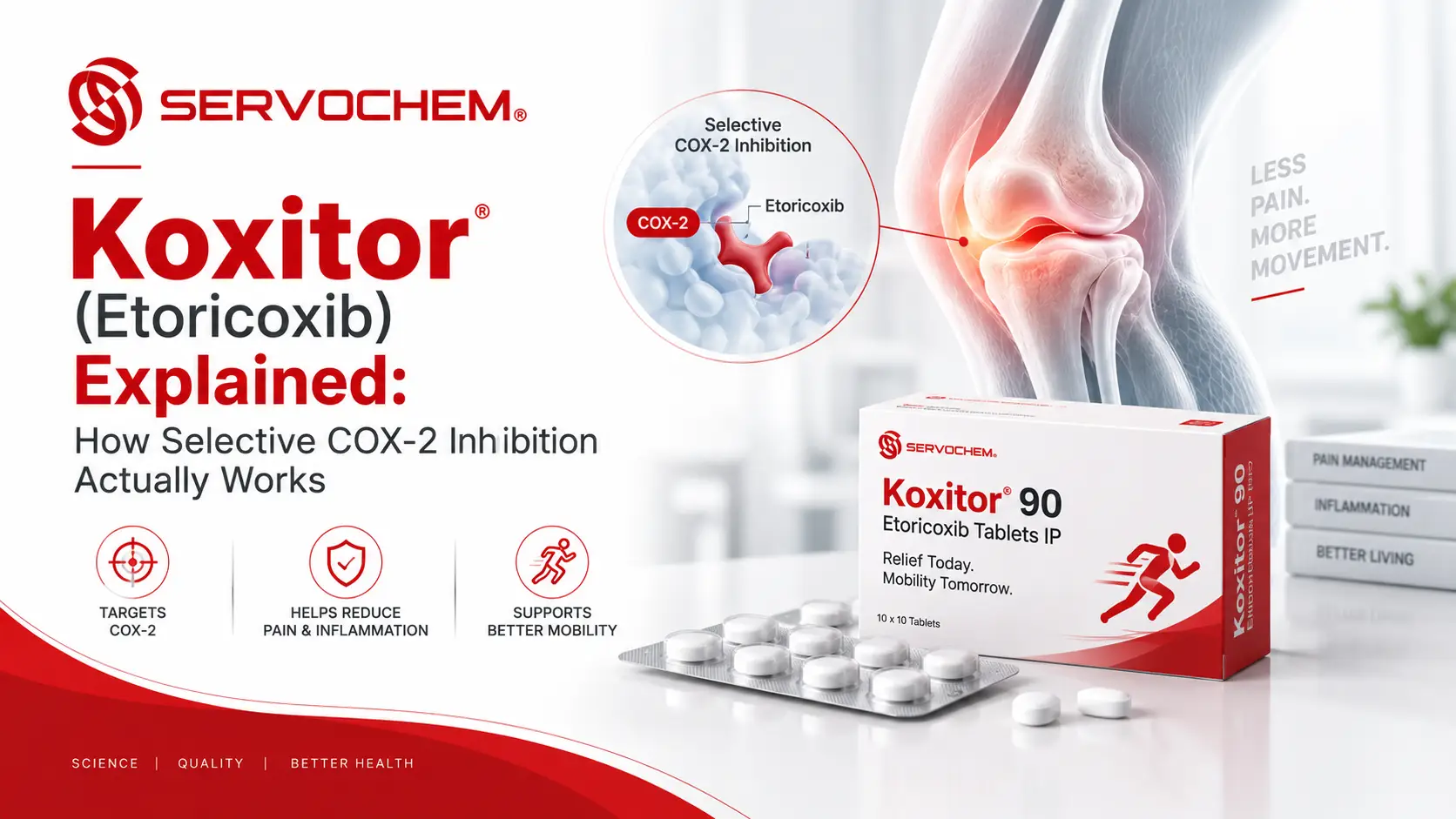 Koxitor (Etoricoxib) Explained: How Selective COX-2 Inhibition Actually Works